Design Thinking
Not everything should be a touchscreen.
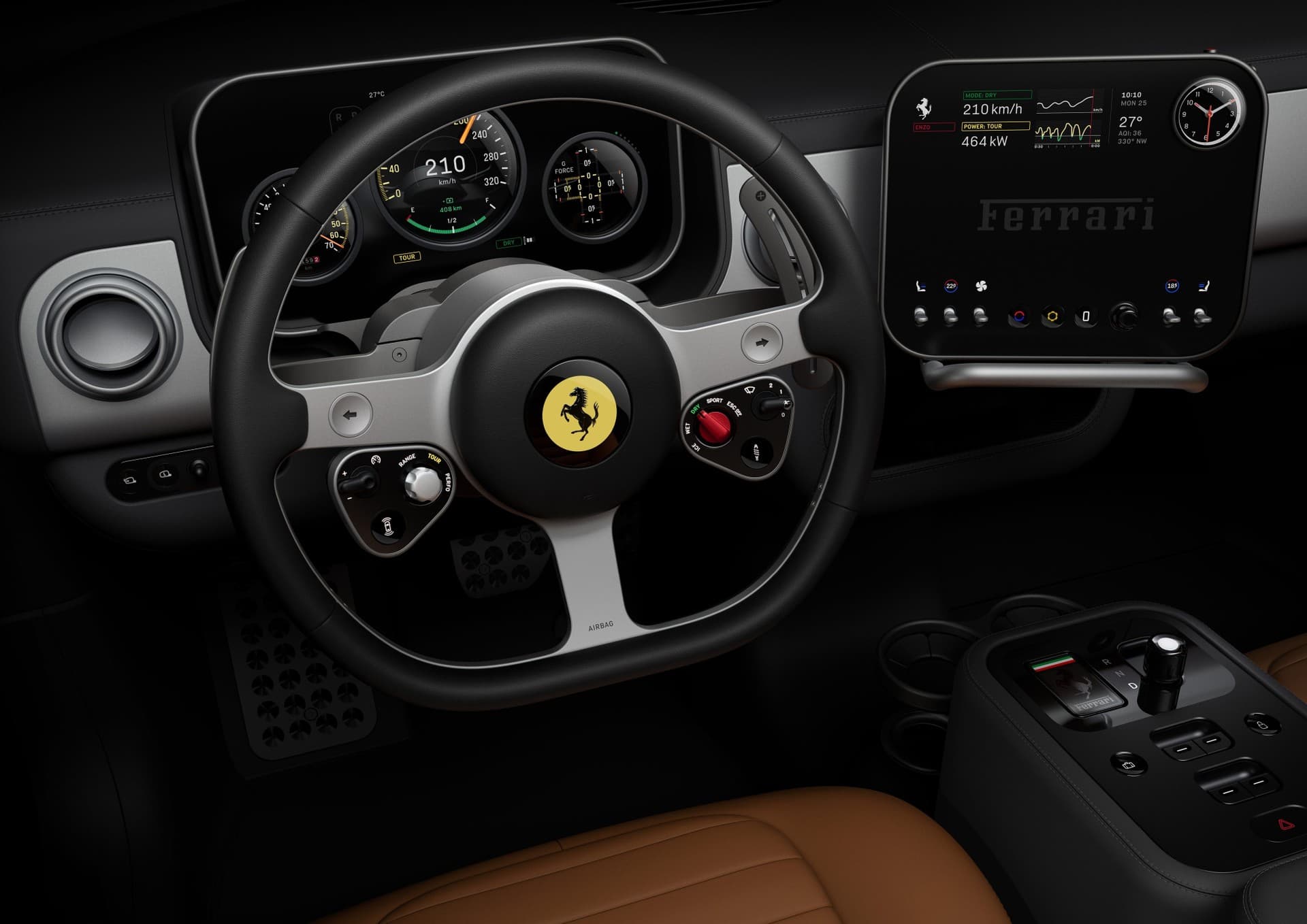
Ferrari entered the electric car market with the ‘Luce’, collaborating with LoveFrom, founded by Sir Jony Ive with fellow designer Marc Newson, who has been collaborating with Ferrari for five years on every dimension of the new car’s design.
…a car that honours Ferrari’s legendary heritage while challenging conventions and reimagining every detail, from materials and ergonomics to the interface and the overall user experience.
One design decision caught my attention.
Physical buttons.
While the electric car industry is obsessed with giant touchscreens, Ferrari chose knobs, toggles and switches.
Honestly, I don’t want an electric car yet because of the screens. I don’t want to swipe through a menu to turn on/off the AC while driving at 70mph on the M25. But yes, I want a Ferrari. Guess who wouldn’t, right?
The car industry is going through the same phase as tech; let’s remove all the buttons, let’s make everything all screen. Is it because it looks modern? Is it cheaper? Just because you CAN doesn’t mean you SHOULD.
In a real driving experience, you may want to turn the music down, a muscle memory, a physical button; one hand, eyes on the road, done. You want to change the temperature, same problem. You need a demister, same; urgently, I need more visibility!
Why physical buttons matter in cars:
- Safety: You can feel a button without looking away from the road.
- Muscle memory: you learn where the AC or demister knob is; you don’t learn where a menu item is; less cognitive load for the driver.
- Haptic feedback: you KNOW you pressed it.
You look at the screen, you tap it, no feedback, you have to check again what you tapped on it? Potentially, at 70mph, that’s ~90 metres blind. That’s dangerous, right? Do you think checking on-screen controls for what you are doing creates a compelling connection between you and your car? I don’t think so.
The broader principle applies also to home appliances; Ovens with touch screens, washing machines with an app? Not every item needs an app or touch screens; (yes, I keep touching it with my bum by mistake). Some need a button I can feel with my wet hands, press without looking.
When I was searching about car touchscreens, I found out there is a startup actually selling physical buttons for Tesla cars; people are literally buying 3rd party buttons to improve their experience.
And here’s the irony. Remember the MacBook Pro’s Touch Bar? When did they replace the buttons with a touch strip? Oh, I used that. Every time I needed to ‘escape’, I literally stared at the bar to figure out where I was tapping. What happened? Apple listened to the feedback and brought the physical keys back with better haptic feedback; a little shallower, but you know you pressed it. That is what matters. That was under Jony Ive’s leadership, too. And this time, Jony Ive kept the physical buttons for Ferrari.
I understand when we design something, we want the coolest look; we want our product to stand out. But in the real world, understanding the context and the experience matters more than the modern look. A car at 70mph. An oven with wet hands. A washing machine you operate without your glasses on.
Good design isn’t about what looks cool. It’s all about what works well. Nielsen’s Heuristics were written in 1994, and they still apply. Some design principles don’t expire.
A physical button at 70mph isn’t old fashioned. It’s good UX.
Image source: Ferrari
Written by
Ezgi Bozdoğan
Slow human designer with AI-assisted craft | Senior Product & UX Designer | Research